> For the complete documentation index, see [llms.txt](https://seo-junior9.gitbook.io/our-s-info-blog/llms.txt). Markdown versions of documentation pages are available by appending `.md` to page URLs; this page is available as [Markdown](https://seo-junior9.gitbook.io/our-s-info-blog/comprehensive-guide-to-modern-building-security.md).
# Comprehensive Guide to Modern Building Security
Establishing a safe and productive working environment begins with the implementation of a proper access control system that monitors the movement of individuals within a building. In the contemporary commercial landscape of Singapore, which is becoming increasingly reliant on high-tech infrastructure, traditional locks and mechanical keys are no longer sufficient to secure modern offices, data centres, or sensitive industrial sites. Professional organisations now require more sophisticated methods to manage entry and exit points effectively. By investing in a smart electronic solution, a business not only enhances its overall level of security but also gains significant benefits in terms of daily convenience and administrative responsibility.
A comprehensive door access system is designed to regulate exactly who can enter or leave a building, a specific room, or any enclosed space within a facility. These digital frameworks operate by verifying the identity of an individual and subsequently granting access based on valid credentials such as a numeric code, a proximity card, or a unique biometric fingerprint. To ensure total reliability, these systems are underpinned by a robust structured cabling system to ensure maximum operational uptime. Whether for a small local office or a large multi-site firm, these systems are designed to be secure, scalable, and easy to use.
### Key Takeaways:
* Site surveys identify security needs and layout.
* Structured cabling provides scalability for future growth.
* Labelling connections reduces troubleshooting time significantly.
* Power redundancy protects equipment and maintains security.
* CCTV integration creates visual audit trails for incident investigation.
### Selecting Appropriate Authentication Formats
Card-based entry systems are among the most common solutions employed today in commercial premises and standard office environments. In these setups, users are issued with magnetic stripe cards or proximity badges that grant them immediate access when they are swiped or tapped against a compatible electronic reader. This technology is particularly favoured by small and medium-sized businesses that require a tested and cost-effective method of securing their property without a complex initial setup. While easy to use, physical cards can be easily misplaced, stolen, or broken, which necessitates a continuous cycle of replacement and administrative updates.
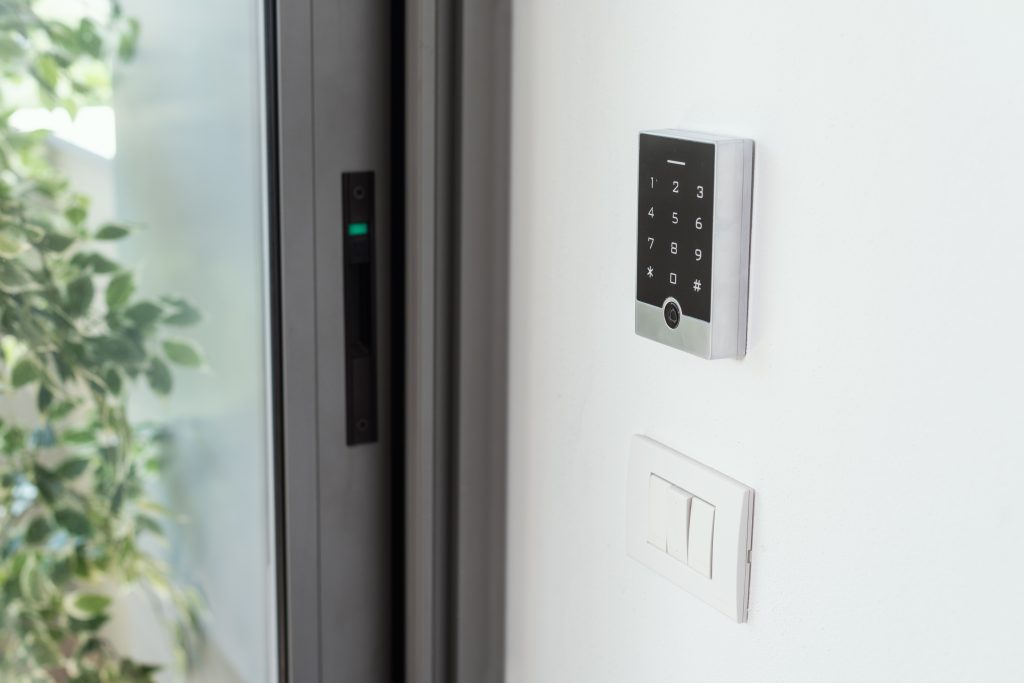
Keypad access systems offer a different approach to security by utilising passwords or virtual codes that users must enter manually before they are permitted to pass through a door. One of the primary advantages of this method is the complete elimination of physical badges or keys, which significantly reduces the logistical burden of managing hardware for a large workforce. However, the reliance on numeric codes does introduce specific security risks, as virtual codes can be easily forgotten by employees or shared with unauthorised individuals. These systems are often suggested for medium-security locations where convenience is a priority, such as office common rooms or staff storerooms.
### Advanced Biometric and Mobile Solutions
Biometric systems represent a significant leap forward in authentication by utilising unique human characteristics such as fingerprints, facial recognition, or iris scanning to confirm a person's identity. Because these credentials are based on biological traits, they are incredibly hard to duplicate or steal, making them one of the safest security options currently available on the market. Comnet specialises in implementing these advanced solutions for clients with stringent requirements, such as financial institutions, medical facilities, and critical data centres. While they offer quick authentication and minimal risk of spoofing, they require higher initial setup costs and frequent maintenance to remain accurate.
Mobile access control systems utilise the power of modern smartphones, allowing users to open doors through a dedicated mobile application or via Bluetooth and NFC technology. This modern approach provides an extremely high level of simplicity and convenience, as most employees already carry their phones at all times. Business owners can benefit from remote rights management, which allows them to grant or revoke entry permissions instantly from any location, making it perfectly suited for today’s mobile work environment. While highly convenient, users must remain mindful of their personal mobile network and battery life to ensure they do not lose access unexpectedly.
### Building a Structured Cabling Foundation
A frequent mistake amongst growing organisations is the reliance on ad-hoc cabling as their network requirements expand. Whilst this approach might be tolerable in the very short term, it rapidly leads to an unsightly environment, unstable operations, and a highly inconvenient diagnostic process. The secret to achieving trouble-free server room functionality lies in the implementation of an efficient cabling system that is designed for longevity. Professional structured cabling solutions in Singapore enable businesses to manage their infrastructure professionally, whilst ensuring the system is fully scalable for future needs.
Having an organised system allows for great flexibility when the time comes to add new devices or upgrade existing systems with minimal disruptions to the workforce. In many instances, organisations realise too late that their makeshift wiring cannot support the high bandwidth potential required by modern technology. By choosing a structured infrastructure from the outset, companies create a stable environment where critical equipment is protected, and uptime is preserved. This methodical approach to cabling design forms the foundation of a resilient and efficient server room that can grow alongside the company.
### Optimising Thermal Stability and Identification
Traceability is vital in a server room where technicians may be managing dozens or even hundreds of individual cables. Not knowing which cable connects to what can cause significant delays during troubleshooting, with some technicians spending hours tracing a single line. Professional procedures always include accurate labelling at both ends of every cable and the creation of elaborate schematics for the entire cabling infrastructure. By keeping diagrams up-to-date, your IT team can quickly identify issues and make changes with ease, significantly improving server room efficiency.
Poorly managed cables can act as a physical barrier that plugs up essential vents and restricts the natural movement of air. This restriction inevitably leads to the overheating of sensitive equipment, which can drastically reduce performance levels and burn out expensive servers and network switches. The most effective layouts utilise cable trays, racks, and horizontal or vertical organisers to keep all wiring tidy and out of the way. By ensuring that the cabling does not obstruct vital airflow, you protect the longevity of your IT hardware and maintain high-speed performance consistently.
### Power Redundancy and Interference Control
Access devices depend on stable electricity, and incorporating uninterruptible power supplies ensures continuous operation during electrical outages. A reliable power supply prevents system downtime, protects sensitive electronics, and supports critical access functions during power disruptions, which is essential for high-security environments. This level of redundancy is particularly vital when routing infrastructure for [security door access control systems](https://www.comnet.sg/types-of-access-control-systems-for-doors-gates/), where constant communication is required for building safety. Regularly testing these backup modules is a vital part of the setup to confirm they can handle the load when the main grid fails.
Running power and data cables together frequently causes network instability due to electromagnetic interference. Best practices involve keeping power and data cabling separated and using high-quality shielding materials where possible. This separation is especially important for sensitive systems like CCTV or entry controls, where signal integrity is critical for reliable security operations. Avoiding electromagnetic interference is essential for ensuring that security and communication systems perform at their peak levels without signal disturbance. Periodic inspections are also required to ensure these systems remain in optimal condition against factors like dust or abrasion.
### Integrating Surveillance and System Commissioning
Modern access solutions often integrate seamlessly with a CCTV system to provide visual verification alongside digital access logs. When a credential is used or a door is forced, the system can automatically direct nearby cameras to record the event and alert security personnel instantly. This integration strengthens overall security by combining entry control with real-time monitoring of the premises. Final commissioning should confirm the synchronisation between video records and access events, ensuring that time stamps are perfectly aligned for accurate reporting and security audits.
The final checks before handing over the system involve verifying that all doors and gates lock and unlock exactly as expected under constant use. Technicians must run multiple tests with different user profiles and verify that the software logs accurately mirror the physical activity observed at each entry point. A final inspection ensures that all parts are tightly fitted and that the backup battery is fully functional and ready to take over if required. By following this structured process, organisations can achieve long-term security and operational continuity while gaining total peace of mind.
FAQs
1. **Why is a site survey necessary before starting an installation?** A proper site survey evaluates the client's security requirements, property layout, and existing electrical infrastructure to ensure the system is tailored to the building and avoids unnecessary modifications.
2. **How do uninterruptible power supplies protect access control?** They ensure continuous operation during electrical outages, protect sensitive electronics from damage, and support critical functions to prevent system downtime in high-security environments.
3. **What role does structured cabling play in server room performance?** Structured cabling provides an organised, scalable system that allows for easier maintenance, rapid troubleshooting, and the flexible addition of new devices with minimal business disruption.
4. **Why must data and power cables be kept separate?** Separating these cables avoids electromagnetic interference, which is vital for maintaining the signal integrity and reliability of sensitive systems like CCTV and entry controls.
5. **How does CCTV integration improve incident investigation?** When integrated, cameras capture footage instantly as credentials are used, providing visual verification alongside access logs to enhance audit trails and incident investigation.