> For the complete documentation index, see [llms.txt](https://seo-junior9.gitbook.io/our-s-info-blog/llms.txt). Markdown versions of documentation pages are available by appending `.md` to page URLs; this page is available as [Markdown](https://seo-junior9.gitbook.io/our-s-info-blog/thermage-or-ultherapy-choosing-your-lift.md).
# Thermage or Ultherapy: Choosing Your Lift
For those noticing the first signs of facial sagging, the decision between two leading non‑surgical treatments often comes down to understanding how energy interacts with skin at different depths. Thermage and Ultherapy both stimulate collagen without incisions, yet they use fundamentally different technologies. This guide explains each procedure in clear, practical terms, helping you match your skin concerns to the right option. You will learn what happens during a session, how long results take to appear, and which treatment suits your age and laxity level.
Many patients also consider combining lifting procedures with surface resurfacing. For example, Pico laser treatment is frequently used to address pigmentation, acne scars, or uneven texture after the deeper collagen response has settled. Understanding the synergy between lifting technologies and laser therapies allows you to plan a comprehensive rejuvenation strategy. This article focuses on Thermage and Ultherapy while noting where a laser might fit into your overall skin journey.
#### Key Takeaways:
* Thermage uses radiofrequency energy to heat mid‑layer skin, promoting collagen for improved firmness and smoother texture.
* Ultherapy employs focused ultrasound to reach deeper foundational layers, offering a more noticeable lifting effect for moderate sagging.
* Results from both procedures develop gradually over two to six months, with a single session typically sufficient.
* Thermage suits mild laxity and fine lines; Ultherapy is ideal for visible sagging on the jawline, neck, or brows.
* For surface concerns like pigmentation or scars, Pico laser treatment can be scheduled after the skin has healed from lifting procedures.
### Understanding Non‑Surgical Skin Tightening
Controlled energy delivered beneath the skin triggers a natural healing process. Whether radiofrequency or ultrasound, the heat causes an immediate contraction of existing collagen fibres, giving a subtle initial firming. More importantly, the thermal stimulation wakes up fibroblasts, which then produce new collagen and elastin over several months. This gradual rebuilding leads to tighter, smoother skin without the risks of surgery.
Both Thermage and Ultherapy are non‑invasive, meaning no cuts or stitches. Most people return to work the same day. However, the depth of energy delivery differs. Radiofrequency works in the mid‑dermis, while ultrasound reaches the SMAS layer – the same tissue surgeons tighten during a facelift. Understanding this difference helps you decide whether you need mild firming or a more pronounced lift. For those with additional pigmentation issues, a separate Pico laser treatment session can be added later to refine skin clarity.
### How Thermage Works and What It Feels Like
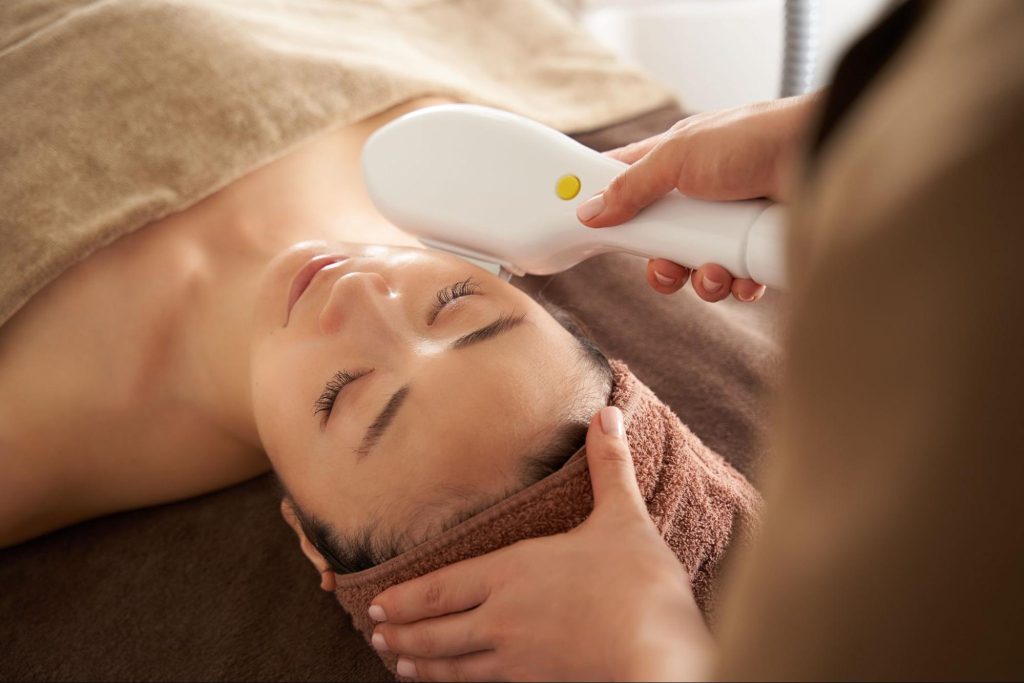
Thermage delivers radiofrequency waves through a handheld device that simultaneously cools the skin’s surface. The energy heats the dermis to around 65‑75°C, causing collagen fibres to contract. The cooling tip protects the outer layer, making the treatment comfortable. Most people describe a deep warmth followed by a brief cooling sensation. The procedure typically lasts 45 to 90 minutes, depending on the area.
Thermage is particularly effective for mild to moderate sagging on the cheeks, jawline, and around the eyes. It also improves texture and fine lines. Because it does not penetrate as deeply as ultrasound, it is a good choice for younger patients or those wanting subtle prevention. After the session, you might see some immediate tightening, but the full effect unfolds over months. If you also have sunspots or uneven tone, a course of [*Pico laser treatment*](https://astiqueclinic.com.sg/pico-laser-treatment-guide/) can be planned after your skin has fully recovered from Thermage.
### How Ultherapy Works and Its Deeper Reach
Ultherapy uses micro‑focused ultrasound with real‑time imaging. The practitioner can see the layers of tissue on a screen and deliver energy precisely to depths of 1.5mm, 3.0mm, and 4.5mm. The deepest point reaches the SMAS layer, which is responsible for structural support. The ultrasound creates tiny thermal coagulation points, triggering a strong collagen‑building response. Sensation varies – some feel a mild tingling, others a deeper prickling.
Because Ultherapy targets deeper layers, it is better suited for patients with noticeable sagging on the lower face, neck, and brow. It can lift jowls, reduce a double chin, and open up the eye area. Results are not immediate; you may notice an early lift after a few weeks, but the best outcome appears around three to six months. One session is usually enough, and the effects last 12‑18 months. For those who also have textural irregularities, combining Ultherapy with Pico laser treatment can address both laxity and surface quality in a staged approach.
### Comparing Technologies: Depth and Sensation
The main difference between the two technologies lies in the depth of energy penetration. Radiofrequency heats a broader volume of the mid‑dermis, making it excellent for general firming and smoothing. Ultrasound focuses energy at specific points much deeper, allowing for a more targeted lift. Neither is “better” overall; the right choice depends on your degree of sagging and your comfort preferences.
In terms of sensation, Thermage is often described as a warm, deep massage with brief hot pulses. Ultherapy can feel like tiny pinpricks or a light electrical sensation. Both are manageable with a topical numbing cream. Some patients choose to have a sedative for Ultherapy if they are sensitive. After either treatment, you can expect mild redness or swelling for a day or two. If you later decide to improve residual pigmentation or acne scars, Pico laser treatment can be performed once the skin is stable, usually four to six weeks after your lifting session.
### Who Is a Good Candidate for Each?
Thermage works well for people in their late twenties to forties who have early laxity, such as a slight cheek droop or fine lines around the eyes. It is also effective on body areas like the stomach or thighs. Because it is gentle, it is a popular first step for those new to aesthetic treatments. There is virtually no downtime, and the natural results appeal to those who want to look refreshed rather than altered.
Ultherapy is generally recommended for those in their mid‑thirties to sixties with more advanced sagging, including heavy jowls, a blurred jawline, or a drooping brow. It can also treat the neck and décolletage. The procedure requires a bit more commitment – though still non‑surgical – and the lifting effect is more noticeable. For patients who also struggle with sun damage or uneven skin tone, adding Pico laser treatment after Ultherapy can complete the rejuvenation by clearing melanin and stimulating superficial collagen.
### Planning Your Treatment Sequence
If you are considering combining a lifting procedure with laser resurfacing, the order matters. Most practitioners recommend completing the deeper collagen‑stimulating treatment first – whether Thermage or Ultherapy – because it takes months for the full effect to develop. Once the skin has settled, typically four to six weeks later, you can begin a series of Pico laser treatment sessions spaced four weeks apart. This allows the laser to target pigmentation and textural irregularities without interfering with the ongoing collagen remodelling.
Alternatively, if your primary concern is pigmentation and you only have mild laxity, you might start with Pico laser treatment to clear surface issues, then assess whether you still want a lifting procedure. A thorough consultation is essential. Your doctor will examine your skin laxity, measure pigmentation depth, and propose a timeline that suits your lifestyle and budget. Clinics with experience in multi‑modal therapy can guide you through this process, ensuring each treatment complements the other.
### Aftercare and Long‑Term Maintenance
After Thermage or Ultherapy, your skin may feel warm and appear slightly pink. Use a gentle cleanser and a rich moisturiser. Sunscreen is non‑negotiable – UV exposure can break down new collagen and cause pigmentation. Avoid saunas, strenuous exercise, and aggressive exfoliation for 48 hours. Mild tenderness can last a week, especially after Ultherapy. This is a sign that collagen production is active.
To maintain results, many patients schedule a yearly touch‑up session. For those who also undergo Pico laser treatment, the laser sessions are usually done in a series of three to six, followed by occasional maintenance. The combination of deep lifting and surface laser resurfacing can produce a more comprehensive rejuvenation than either treatment alone. Always follow your practitioner’s specific aftercare instructions, as individual healing varies.
FAQs
**1. Can I have Pico laser treatment on the same day as Thermage or Ultherapy?**\
It is not recommended. The skin needs time to recover from the deep heating of a lifting procedure. Most doctors advise waiting at least four to six weeks before starting laser resurfacing to avoid prolonged redness or irritation.
**2. Which is more effective for sagging jowls – Thermage or Ultherapy?**\
Ultherapy is generally more effective for moderate to severe jowls because it targets the deeper SMAS layer. Thermage may help with very mild jowling, but for a noticeable lift, ultrasound is preferred.
**3. How soon after a lifting procedure can I see results from Pico laser treatment?**\
Pico laser treatment results for pigmentation often appear after two to three sessions, spaced a month apart. You would typically begin these sessions six weeks after your Thermage or Ultherapy, so the combined outcome becomes visible around four to six months from the start.
**4. Are there any skin types that cannot have these treatments?**\
All skin types (Fitzpatrick I‑VI) are generally safe for Thermage and Ultherapy because they do not target melanin. Pico laser treatment is also safe for darker skin when performed with appropriate settings by an experienced doctor.
**5. How do I choose between Thermage and Ultherapy if I also want to treat pigmentation?**\
If your primary concern is sagging, choose the lifting technology based on your laxity level – Thermage for mild, Ultherapy for moderate. If pigmentation is your main issue, you might start with Pico laser treatment and then reassess whether you need a lift. A consultation with a doctor who offers all three modalities is the best way to decide.